Help Deaf Kids Learn to Code
Another challenge that EEESMA faces is the employability of students after they graduate from school.
Deaf adults in Mexico are either severely unemployed or underemployed even to a far higher percentage than those in the United States which stands at 70%. Deaf children and young adults in Mexico do not have access to a fraction of the educational or support opportunities that American Deaf students are offered.
Friends and donors who work in the technology sector showed us a valuable opportunity which could radically change that situation. There is ample evidence to suggest that tech fields are viable, and in fact, almost ideal for those who are Deaf. With business increasingly moving to email and texting messages rather than in-person meetings or phone calls, the communications challenges for Deaf employees in a traditional work environment are almost eradicated. Consequently, in recent months we have focused on helping our kids become more tech savvy. But having basic computing skills is not the same as harnessing the power of writing or developing programs.
The Help Deaf Kids Learn to Code initiative will prepare our students to be tech specialized and qualified for these fulfilling, stable and well-paid jobs. It will allow them to work remotely, not just in Mexico, but within the global workplace.
Every public and private sector operation on earth requires these skills. By building Deaf students’ arsenals with knowledge and know-how, we are equipping them to bridge the employment gap, regardless of their auditory or communication challenges. We are empowering our kids to become the leaders of the next generation of innovators, with the skills the world needs.
Won’t you help make that happen?
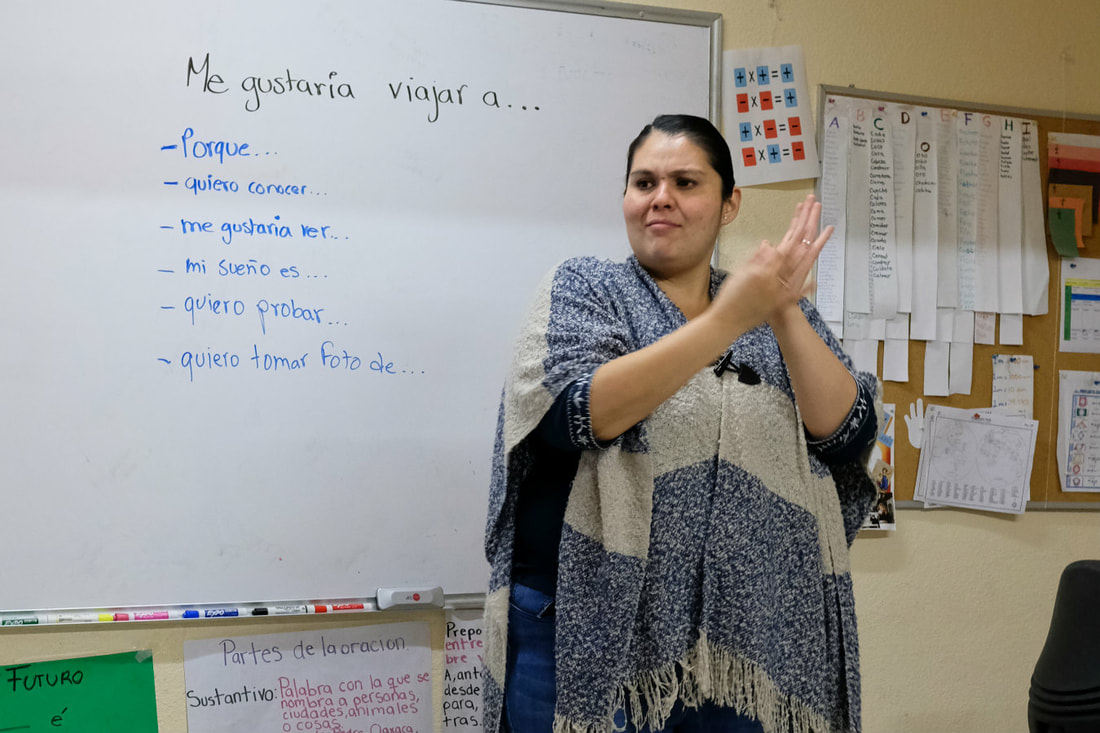
Mexican Sign LanguageMexican Sign Language (LSM) classes are essential to help siblings, parents, and volunteers communicate more effectively with
Deaf students. Classes have also been designed for the public to help ensure more understanding and awareness in the community of the Deaf. Please donate to this program so classes continue on a regular basis. 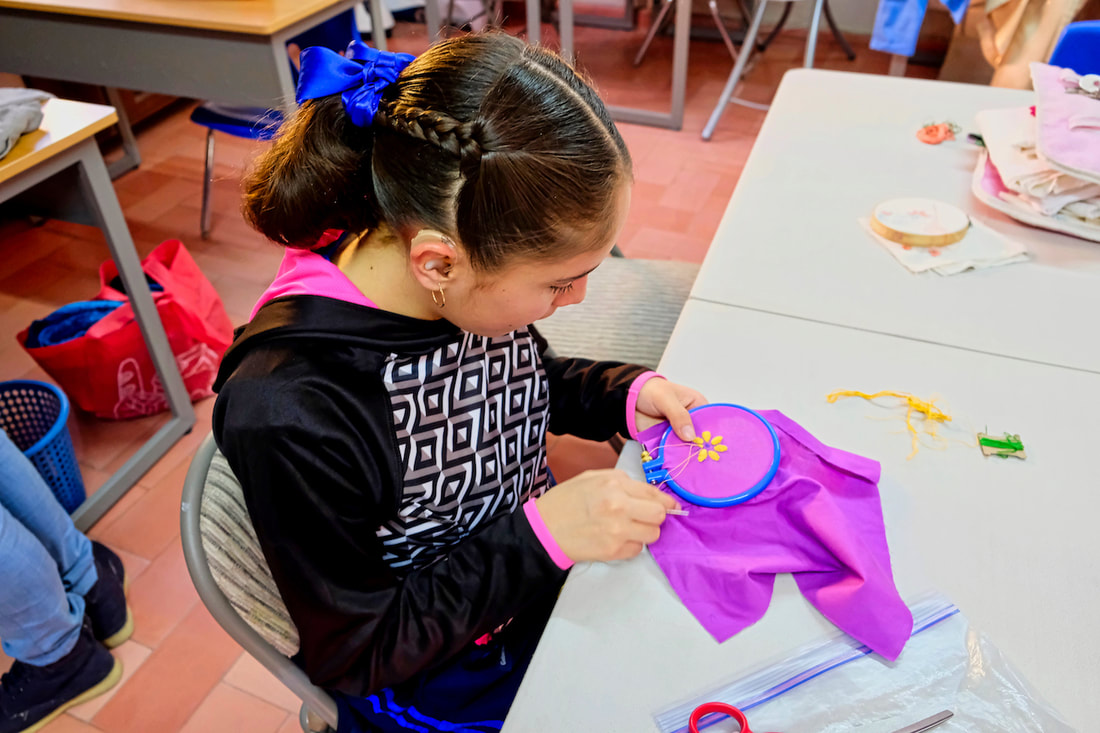
Deseñas GalleryTo showcase and make available by donation the creations made by the students with their own hands in the Vocational Training Workshops, a small display area was carved out of an underutilized school space.
The gallery's name Deseñas means "design" or "of sign"; also referencing the slogan "For the love of sign language". The gallery is manned by volunteers and is open every Friday between 11am-2pm when school is in session. Look for the purple and white ribbons and street-side signage at La Calle Canal 152, EEESMA School for the Deaf. Phone 415-152-0058 Please email [email protected] to learn more. |
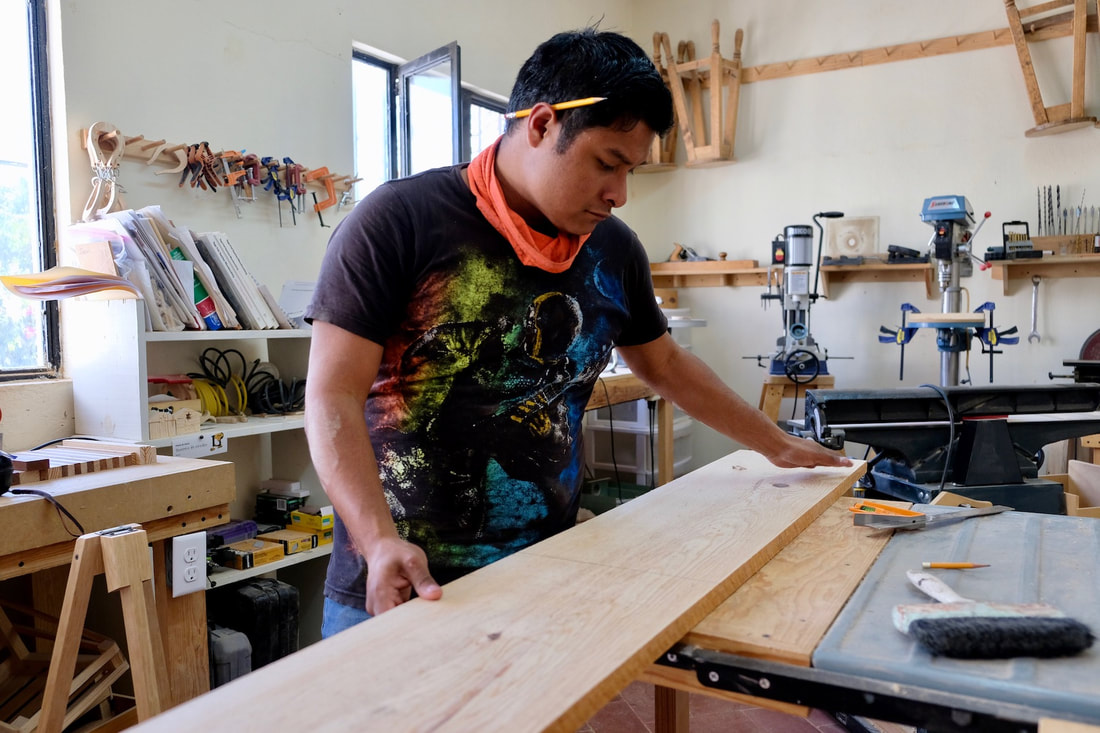
Vocational TrainingMany older students will likely choose not to continue their education past the middle school level, so the school offers vocational training to increase their chances of gaining employment locally.
Students receive skills training from volunteers and small business owners in the community in areas of carpentry, baking, cooking, jewelry making and design, sewing, and computing. Local business involvement and your donation will ensure the workshops continue. 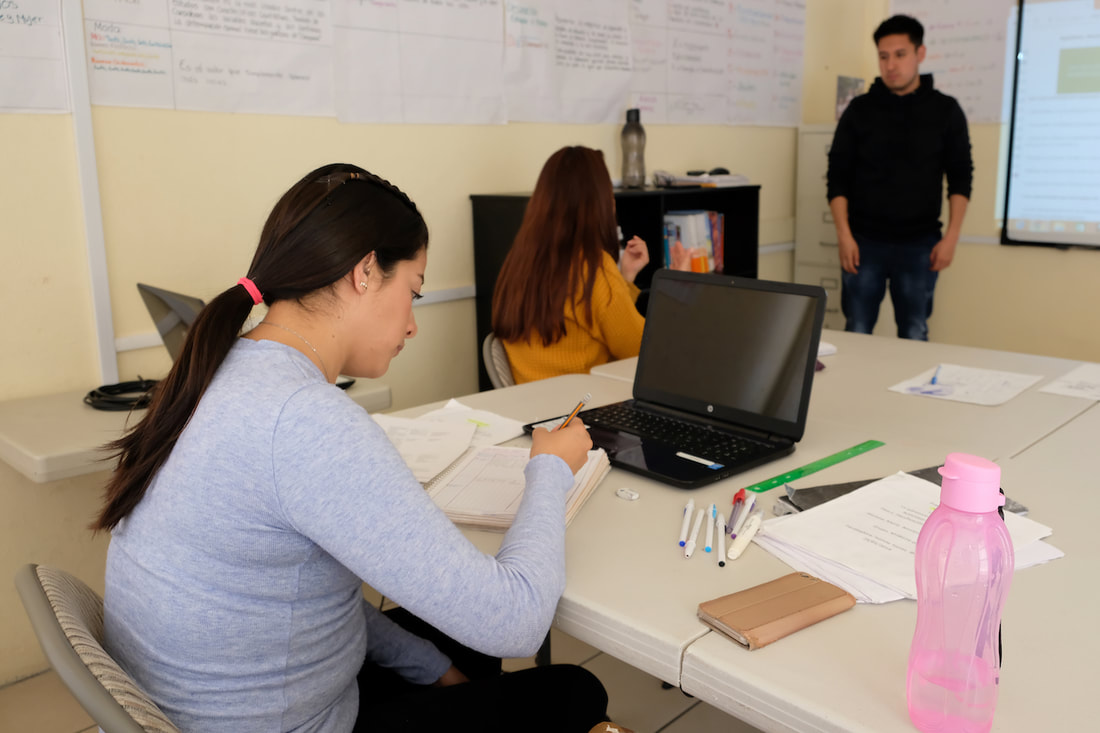
Transition PlanningEnsuring a smooth transition from school to the workplace is essential. In transition planning students receive:
|
Education is not filling of a pail but the lighting of a fire.
